Duke Gardens Water Display
Problem
The education staff at the Duke Gardens teaches lessons on how water flows through different soil types (gravel, sand, silt, and clay). However, they were using small-scale demonstrations with cups of real soil and water. These demonstrations were messy and a hassle to bring to educational conferences and workshops. They were also hard for large groups of students due to their size.
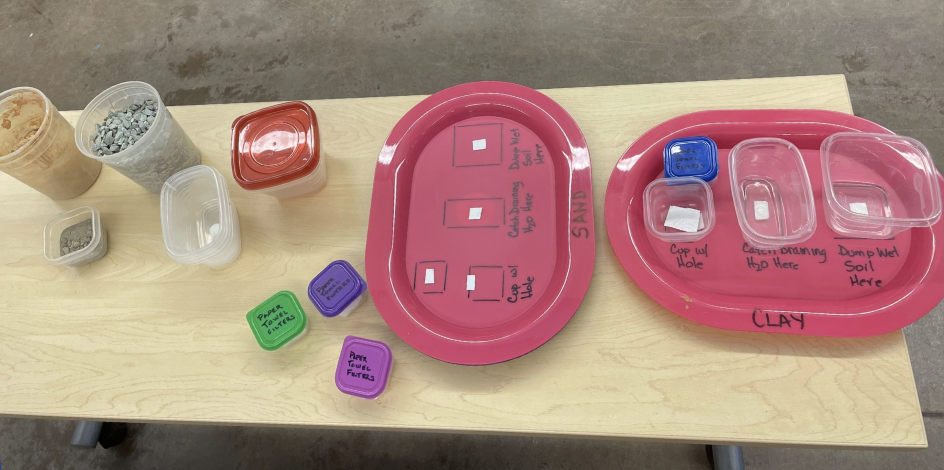
Original Gardens Demonstration
Design Criteria
Clearly depicts differences between gravel, sand, silt, and clay particles
Clearly depicts differences in how water moves through the 4 particle types
Water/Soil interactions visible from 270 degrees, 20 feet away
Size: under 8 cubic feet
Portable: under 20 pounds, ergonomic when carrying
Easy to conduct demonstration
Solution
An LED light display consisting of modular demonstrations to show how water flows through gravel, sand, silt, and clay. The display is still in use today and is one of the few educational materials that the Gardens kept during their renovations.
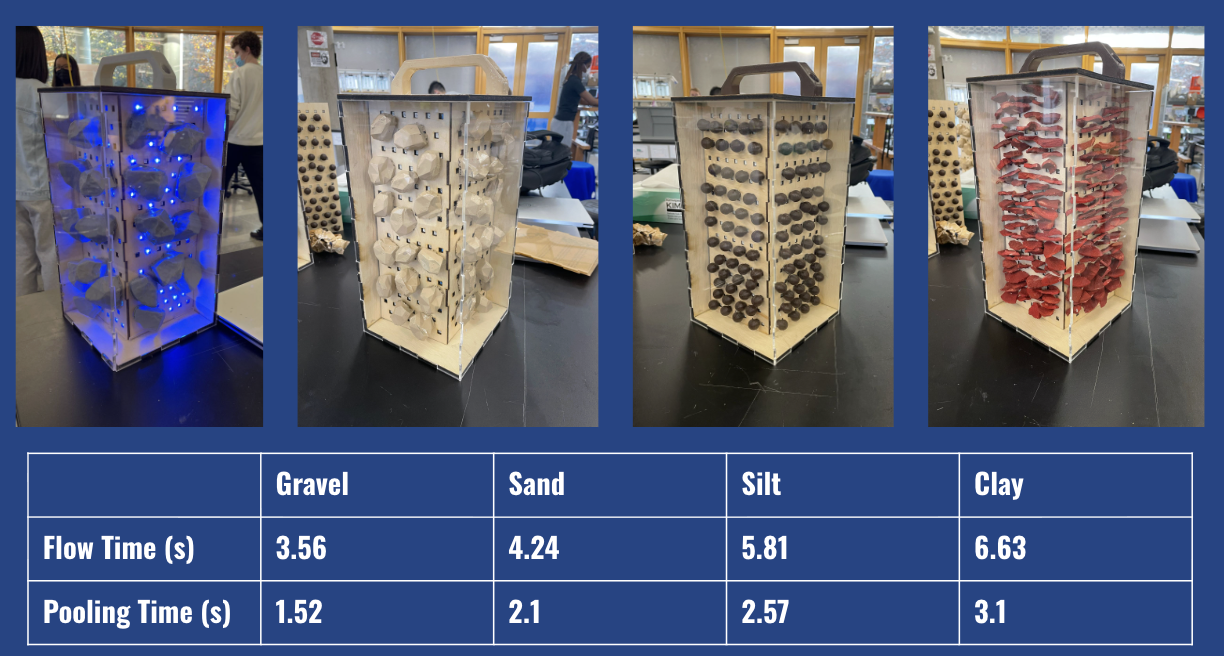
Key Components
Lasercut wood and acrylic housing
3D printed soil particles
Programmed LEDs
Arduino-based electrical system
Rechargeable battery
Color-coded 3D printed handles for portability
Watch Display in Action
Ainsley Pollock - Engineering Portfolio